Case study · Own product, not client work
UI components that work like real hardware.
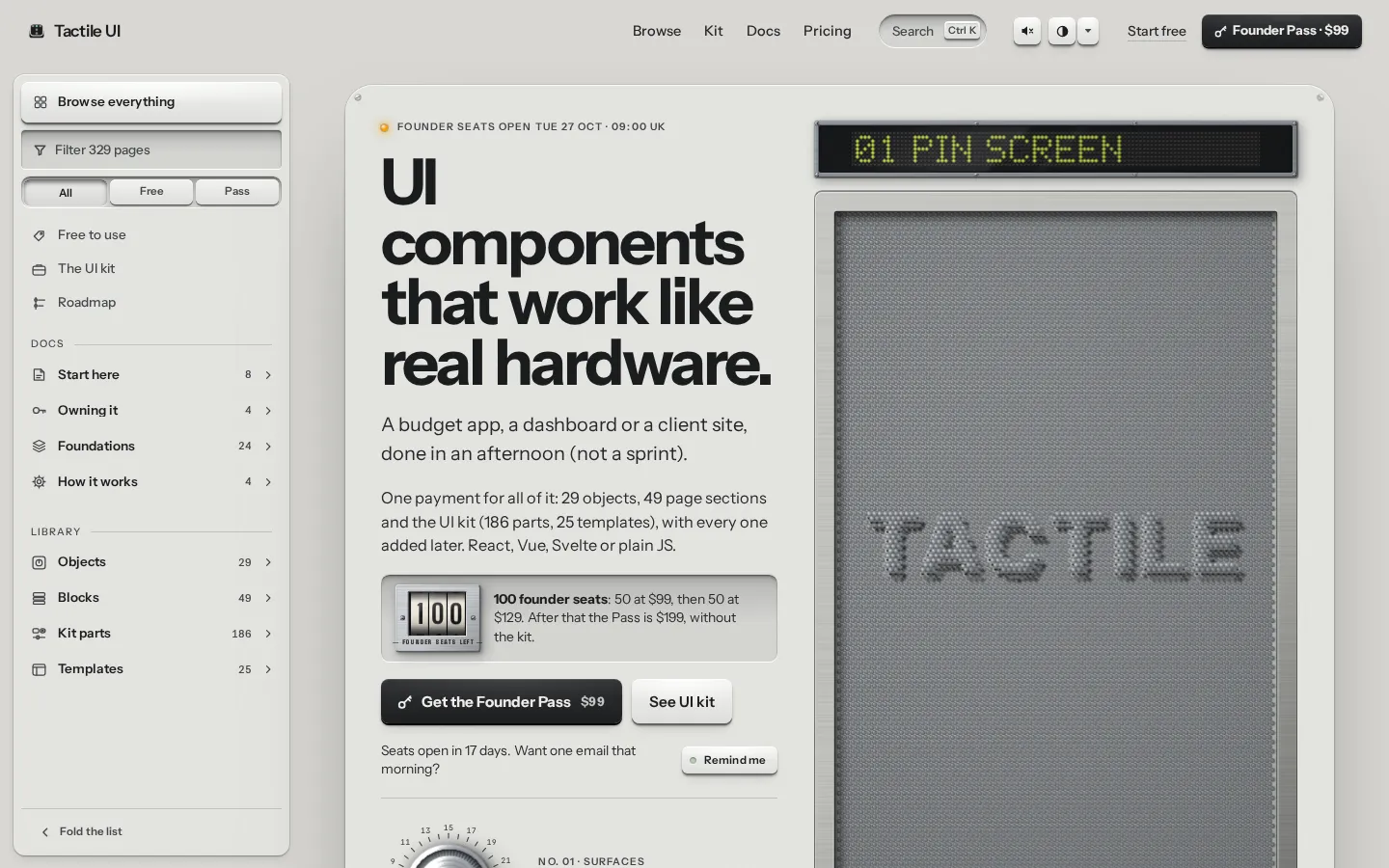
Tactile UI is my own UI kit. Its pieces move and respond to press, drag and turn, and it is sold as one payment for the whole library. No client briefed it and no client paid for it.
What it is, and who it is for
Tactile UI is a library of interface components that behave like physical objects. Its site pitches it at people building an app, a dashboard or a client site who want a finished interface without a long build.
This is my own product. I am labelling it that way on purpose, so it is not mistaken for client work. I make no claims here about sales, users or downloads.
What I designed and built
I designed and built the whole thing: the components, the library around them, and the site that shows and sells them at tactileui.dev. Its own pages describe the components as made by hand.
That is the same job I do on a launch page: a clear first screen, a product that can be understood in seconds, and a way to pay.
What is in it
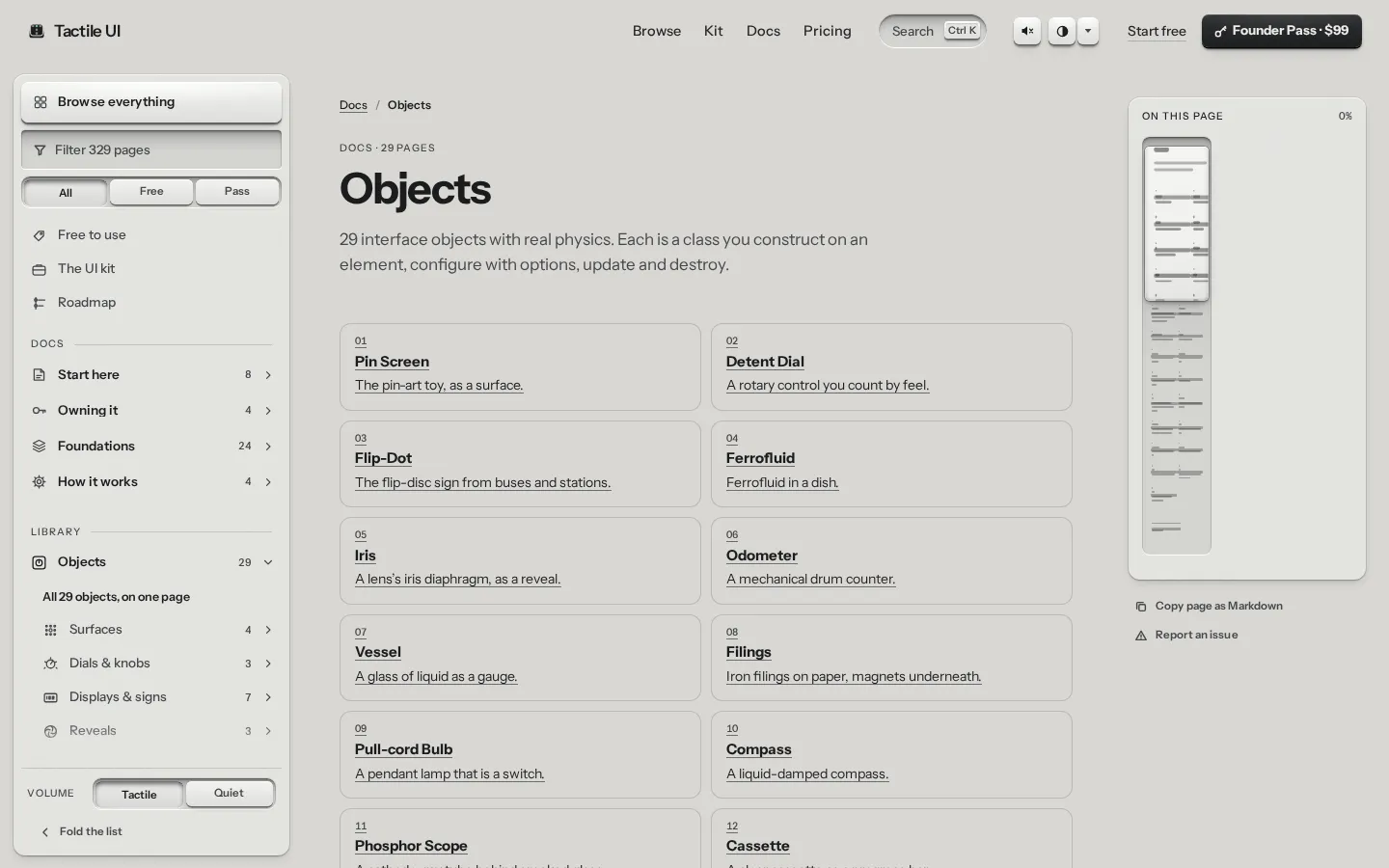
- Objects: 29 interactive pieces with real physics, such as a Pin Screen, Ferrofluid, Chladni Plate, Detent Dial, Odometer, Flip-Dot and Cassette. Each is one module and one stylesheet.
- Blocks: 49 finished page sections built around those objects, including heroes, pricing, footers, FAQs, contact and 404 pages.
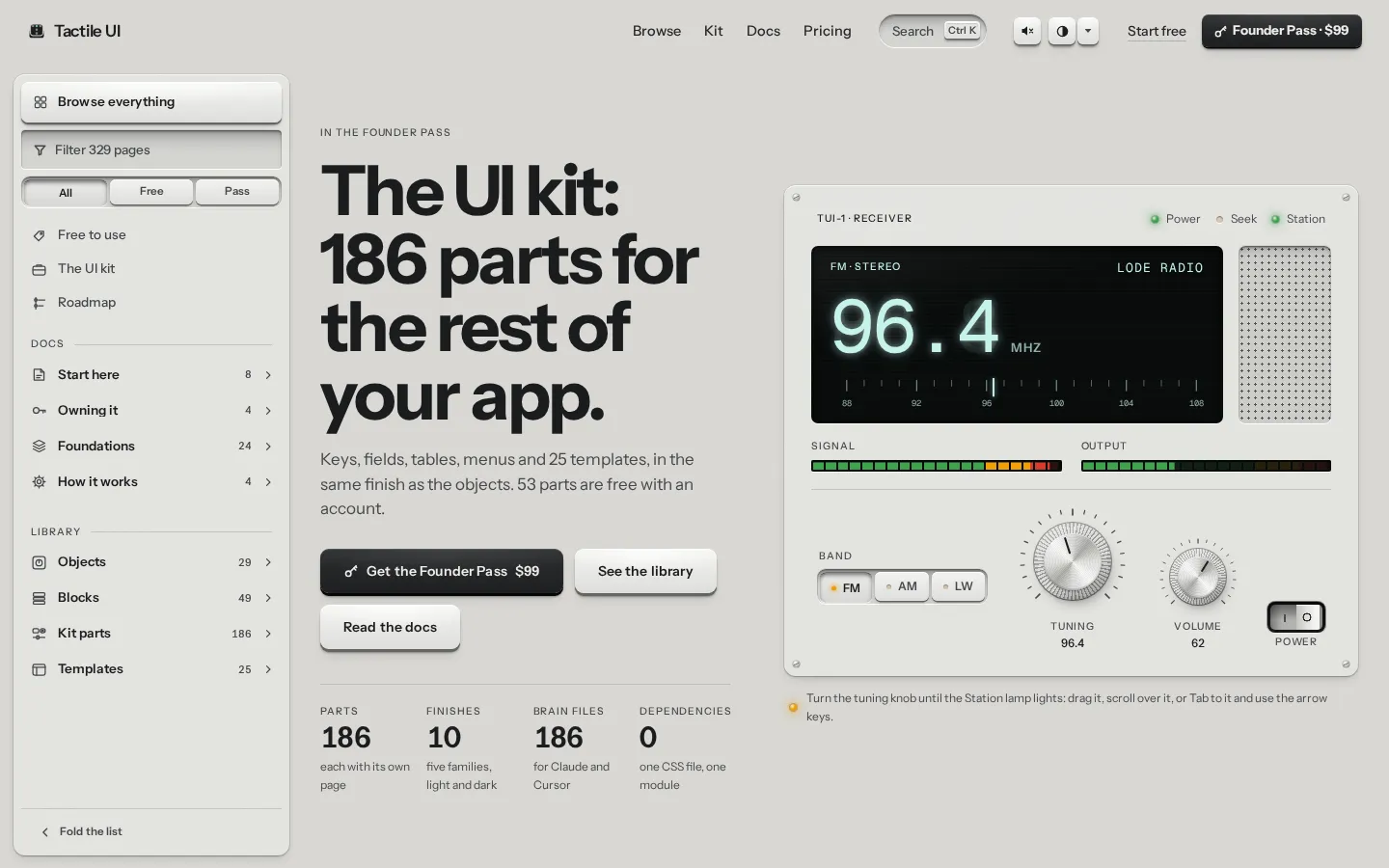
- UI kit: 186 parts, including buttons, forms, charts, tables, dialogs, navigation and AI chat parts. Its page counts 10 finishes, in five families, light and dark.
- Templates: 25 full layouts, including dashboards, SaaS pages, shops, blogs and documentation.
- Settings: a loud Tactile volume and a Quiet one, light and dark themes, and a sound toggle.
- Works with AI tools: its docs cover using it with Claude and Cursor, and installing through shadcn and MCP.
How it is sold
As tactileui.dev states it, the Founder Pass is one payment for the objects, blocks and kit, with later additions included. It is priced in US dollars. The first 50 seats are $99 and the next 50 are $129, and founder seats are listed as opening on 27 October at 09:00 UK time. After the founder seats, the Pass is $199 without the kit, and a Team Pass is $449 for up to five named people.
Some pieces are free. The site says 53 kit parts are free with an account, and the Odometer and Compass are labelled free. Use is allowed in unlimited personal and client projects, but not resale of the objects as a kit, library or template. The $99 Founder Pass has a 30 day refund for any reason. Prices and dates are the site's own and may change, so check tactileui.dev for the current terms.
What this means for your launch
If you sell a product, a course or a kit of your own, the pieces are the ones Tactile UI shows: a first screen that explains the product, a clear price, and a checkout that takes the money. I can design and build that for you.
A single launch page is £795. A Platform starts from £1,795 for up to six pages, two CMS collections and one named workflow, such as appointment booking. Accounts, payments and complex workflows are separately scoped, and nothing is charged before we have talked. The founders page sets out how I work with founders and creators, and the services page has every price.
Selling something of your own?
Book a free 20 minute fit call. Tell me what you sell and what the page needs to do, and I will say plainly whether I am the right person for it.